
Seeds of Change in Laikipia
by Reuben Mwangi Wanjiru
In the heart of Laikipia, young people are rediscovering the wisdom of indigenous seeds and the power of community. Seeds of Change in Laikipia tells a story of hope, heritage, and resilience — how traditional farming, local collaboration, and youth action are nurturing both the land and livelihoods, ensuring that the roots of culture and nature grow stronger together.– The Spark
My name is Reuben Mwangi, and I come from Laikipia, Kenya — a land where the soil tells stories older than memory. In Nanyuki, I grew up surrounded by farmers who believed that every seed carried a spirit, a history, and a promise.
Over time, I began to notice something changing. The traditional seed varieties that once thrived in our fields were quietly disappearing, replaced by commercial hybrids that demanded more water, more chemicals, and more money. At first, it all looked like progress — shiny packets, higher yields. But when drought struck, many of those new seeds withered. Families struggled not because they lacked knowledge, but because they had lost control over what they planted.
That was when I realized that climate change isn’t only about the weather — it’s about the erosion of culture, choice, and identity. It was this realization that planted a different kind of seed in me — the seed of action.
Middle – The Action
Together with a few young people from my community, I decided to act. We began by hosting small gatherings beneath the acacia trees, where elders shared stories about indigenous crops and traditional seed-saving practices. What started as simple conversations soon grew into a local youth initiative dedicated to documenting, protecting, and reviving these traditions.
We collected indigenous seeds from nearby villages — sorghum, millet, black beans, and cowpeas that had nourished generations. With time, we built a modest community seed bank, where young people could learn how to preserve, exchange, and replant these varieties. Our goal was not just to grow food, but to reconnect people to the wisdom of the land.
Participating in events such as the Indigenous Seed, Culture, and Food Harvest Fair reminded me how culture, biodiversity, and livelihoods are deeply interwoven. Farmers shared not only seeds, but also songs, proverbs, and resilience. I learned that every seed is more than nutrition — it’s a memory of survival, adaptation, and care.
Still, the journey has not been easy. In many research and outreach activities, community members expect financial compensation for participation — an understandable request in tough economic times. Yet, as a young researcher and volunteer, I often have no budget to meet those expectations. This has taught me the importance of clear communication, transparency, and finding creative, non-monetary ways to show appreciation, such as offering refreshments, sharing feedback, or simply listening deeply.
Another challenge is visibility. Youth-led initiatives in rural areas often remain unseen and underfunded. Decision-makers and donors tend to favor established organizations, while grassroots efforts like ours struggle for recognition. Social, economic, and political systems still decide whose ideas are valued and whose are overlooked — even when the most practical, community-based solutions are right in front of us.
End – The Vision
Despite these challenges, I believe in the quiet strength of local action. Each time a farmer entrusts us with a handful of indigenous seeds, it feels like receiving both history and hope. I’ve learned that true resilience grows from the ground up — when we honor both tradition and innovation, and when young people are empowered to lead with respect for their communities.
Through Unearth Voices, I hope stories like ours can show that the roots of climate solutions already exist — they just need nurturing, visibility, and support. Investing in youth and indigenous knowledge isn’t a favor; it’s the foundation of a sustainable future.
Our story from Laikipia is not only about seeds. It’s about hope sprouting in dry soil. It’s about young people refusing to watch their heritage fade. It’s about proving that even without many resources, collaboration, culture, and creativity can still bloom.
The future, to me, looks like a garden — one where every community plants its own resilience, watered by memory, guided by science, and sustained by hope. 🌱
About
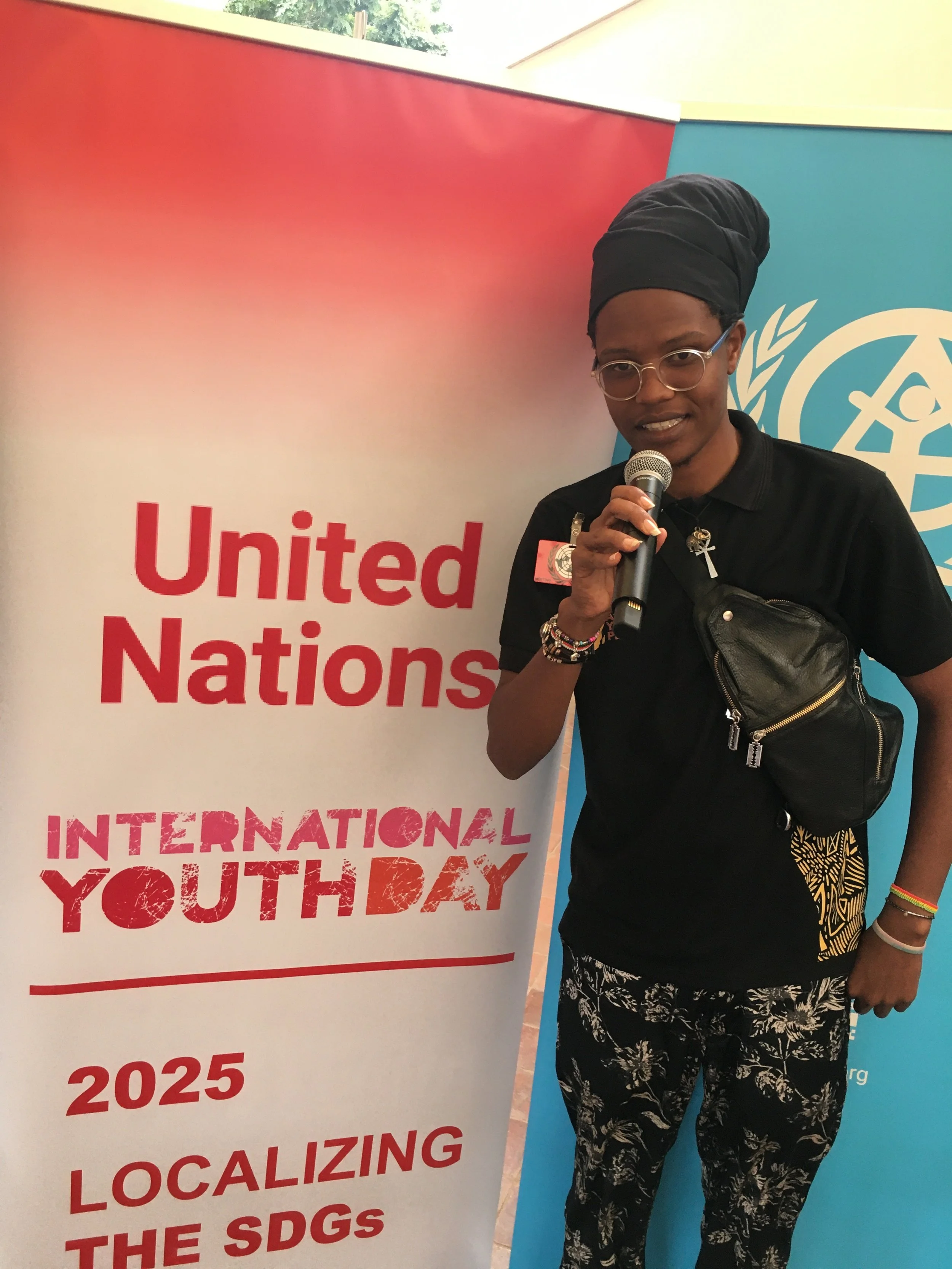
Reuben Mwangi is a youth climate advocate and storyteller from Laikipia, Kenya, passionate about environmental awareness, indigenous knowledge, and community resilience. Since 2021, he has volunteered with the Kenya Red Cross (Laikipia Branch), supporting youth-led initiatives that connect research and local climate action. In August 2025, he earned a Certificate of Completion in the “We Are Nature: Youth Biodiversity Challenge” by the United Nations Environment Programme (UNEP). Through storytelling, Reuben amplifies the voices of young people driving change, highlighting how protecting nature and culture can create sustainable livelihoods and a more resilient future for all.