
When the Earth Started Crying in My Village
by Zuliehat Ohunene Abdullahi
I still remember the first time the earth cried in my village. It was not rain. It was not storm. It was pain. The kind that sits in your chest and refuses to go.
The river behind my grandma’s hut always looked so fresh and tempting, calling us for a nice swim. It was one of the happiest parts of my childhood. But one year, the river started shrinking small small, like it was tired of living. One day, the ground cracked where water used to flow.
People said it was just “normal dry season,” but I knew something was off. The heat that year was wicked. Even at night, the air felt like it was sitting on your skin. The soil became tired. Our whole batch of yam spoiled and rotten before harvest. That had never happened before. We were all so sad and confused. One night, Mama sat outside holding dry soil in her hand. She looked at me, really looked at me and said, “Zuliehat, the earth is dying.” That was when I knew she was serious, because most times she just calls me Zuly, playful and soft. But that night her voice carried fear. Like the earth was decaying right in her palms.
That night, sleep refused to enter my eyes. Since I was a kid, I have always been scared, wondering: if the earth that housed us, fed us, and made us everything suddenly turned bad, what do we do? Who helps us out? Who do we run to when the ground itself is falling sick?
Soon, things became worse. Many farmers could not even raise enough to send their children to school. We heard a story from the next village that one farmer committed suicide because he could no longer feed his family. You could hear the pain in people’s voices when they talked about their crops failing over and over. Some men went out at night to till the land, almost sleeping there, praying the soil would pity them. Their whole life, everything they owned, every dream they had was tied to that ground. Then came the year of too much rain. The same land that begged for water before was now drowning. Flood entered houses, washed away farms, and even carried the small wooden bridge that joined one part of the village to another.
We used to hear of heavy floods in Lokoja, Kogi State where the Niger and Benue rivers meet but that year it felt like the same disaster had followed us home (NEMA, 2022). That was when I understood Mama’s words fully. The earth was not only dying, it was crying out loud. But something changed when the young people in our village said enough. We decided we would not just sit and watch our home disappear.
We didn’t have fancy technology, but we used whatever information or device we could get our hands on. Some secondary school children even read from their Geography textbooks, explaining small small remedies they learned, things like mulching, cover crops, and planting along contour lines. We listened to elders too, old wisdom like planting neem trees to shade the soil, digging drain paths before the rainy season, and storing water in clay pots so nothing is wasted. Nearby villages were also trying their own ways. In Bassa, people used dry leaves to protect their farms from heat. In Adavi, youth groups went house to house, teaching families how to plant early-maturing crops.
In a village close to Ankpa, women revived old seed-saving traditions so people would not depend only on expensive seeds.
Slowly, the land began to breathe small again. Not perfect, but hopeful. Green patches started returning. You could see smiles returning in some homes. One old farmer told us, “Since una begin try all these things, the land dey respond.” Hearing that touched me deeply.
Growing up with all these experiences pushed me to study environmental management. Climate reports say Northern Nigeria is one of the places suffering most from land degradation and changing rainfall (IPCC, 2021). But we don’t need reports to tell us our villages carry the scars already.
Every time I see cracked earth or a fallen tree, something tightens in my chest. But now, it is not only fear I feel. It is responsibility. The land still talks, and I still listen. I write, I learn, I speak, and I work with communities because I don’t want another child to stand on dry, cracked soil, wondering why the earth is dying. My village still remembers. I still remember. The earth still cries sometimes. But now, we are learning how to hold her, how to comfort her, how to heal her.
And this is my message to anyone reading: Don’t wait for the land to die before you care. Start small. Plant something. Save water. Listen to elders. Teach children. Protect the little nature around you.
If we all do our own small part, the earth will not only stop crying one day, but she will smile again. Reference
IPCC (2021). Climate Change: Impacts, Adaptation, and Vulnerability.
NEMA (2022). Flood Impact Assessment: Kogi State and Surrounding River Basins.
About
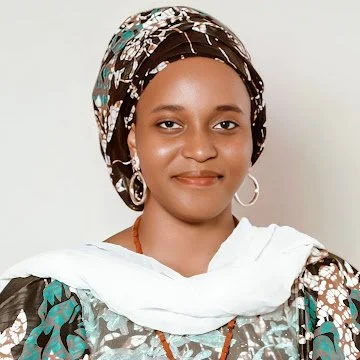
My name is Zuliehat Ohunene Abdullahi. I am a researcher and youth advocate from Nigeria. I work with young people and communities to understand land degradation and climate change using simple digital tools like GIS and mapping. I come from a marginalized community where people depend on the land to live. My work focuses on showing how youth and women can lead local climate solutions even with small resources. I believe that when we tell our own stories, we change how the world sees us and how we see ourselves.