
The Canal That Spoke Back
by Sai Shankar G Nair
When I first went to Vizhinjam, I didn’t expect the place to hit me this hard. Everyone talks about the new port glass towers, cranes, and global trade, but no one talks about the canal that runs beside it. Locals just call it thodu, but for me, it became something else, a mirror showing what happens when ecology, health, and governance stop talking to each other.
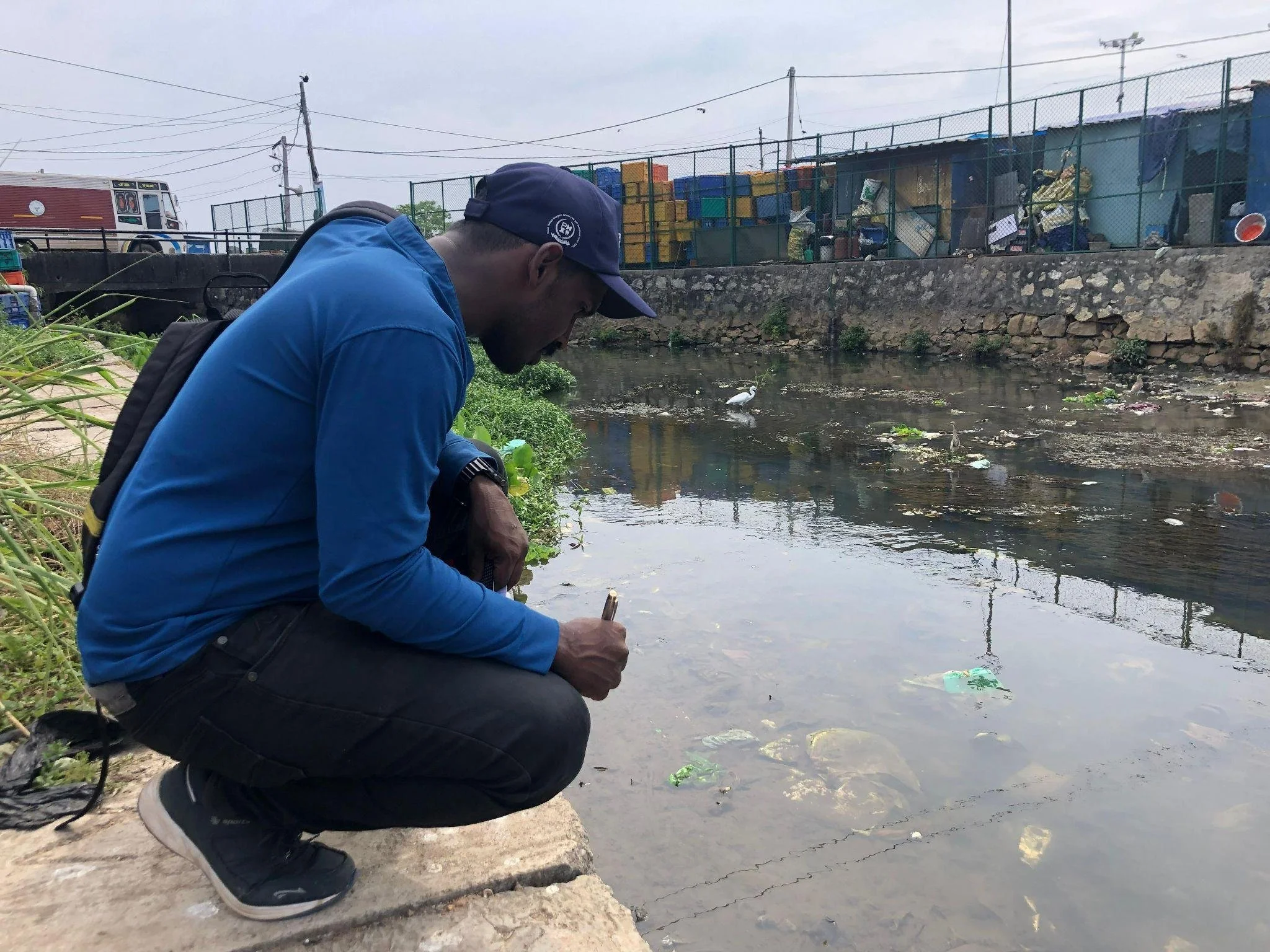
I was there as part of my work on the Integrated Analysis of the Gangayar Estuary, focusing on ecology, public health, and environmental health. On paper, it sounds neat. In real life, it was messy. The canal was basically a living lab of everything wrong: solid waste, untreated effluents, drainage leaks, and neglected households caught in between.
The mornings there were chaotic church bells ringing, fish market yelling, waste trucks moving, and the smell of the canal mixing with the smell of fish. People lived just five feet away from it, used it for washing, and pretended not to notice the color of the water changing every week.
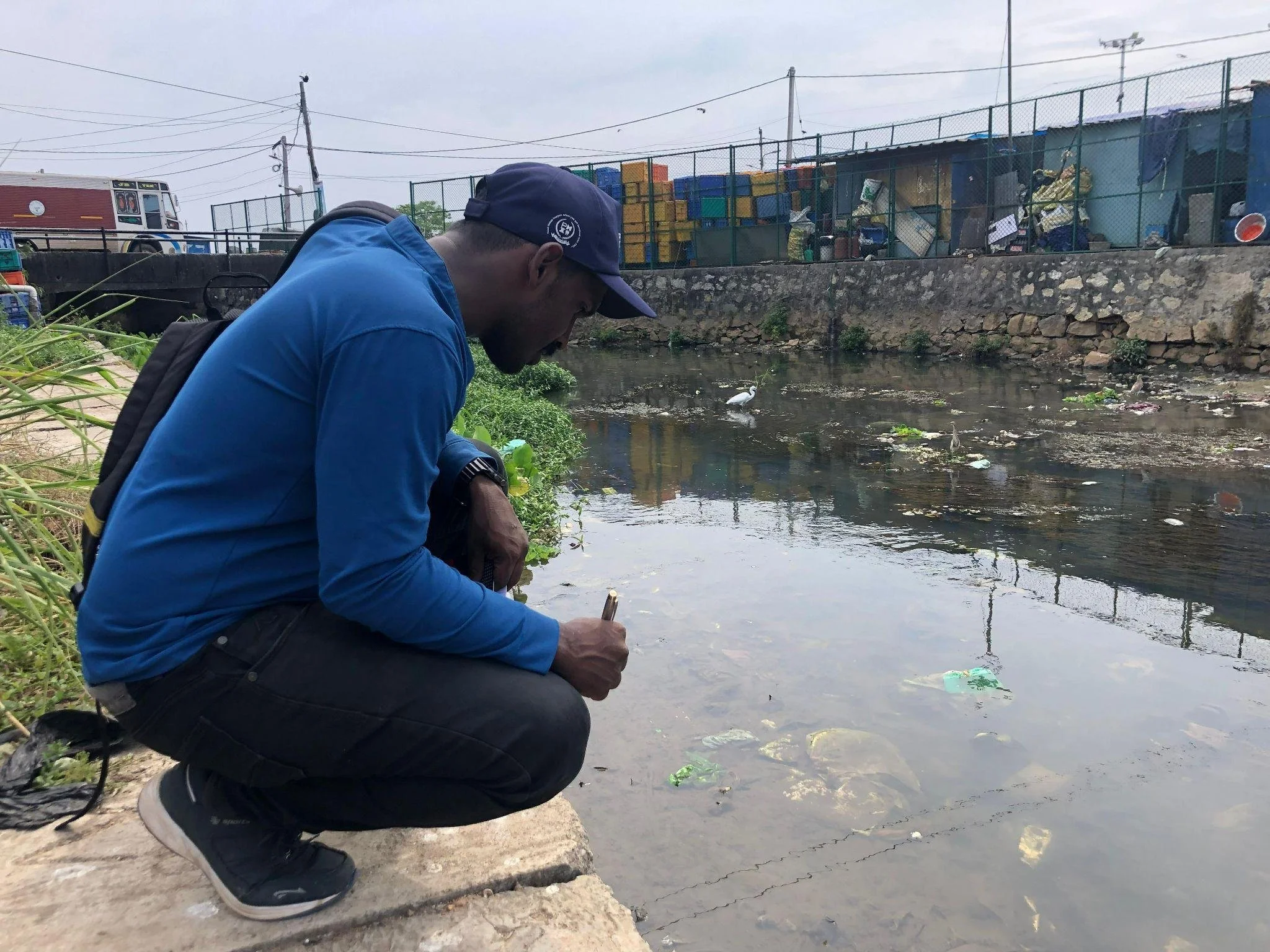
When I began fieldwork with a local NGO, our goal was to collect data, not opinions. We used GIS mapping, biodiversity assessment tools, and public health data correlation. We started by marking waste entry points and mapping the canal’s flow across wards. Within a week, it was obvious the canal wasn’t dying; it was being murdered daily by neglect and poor planning.
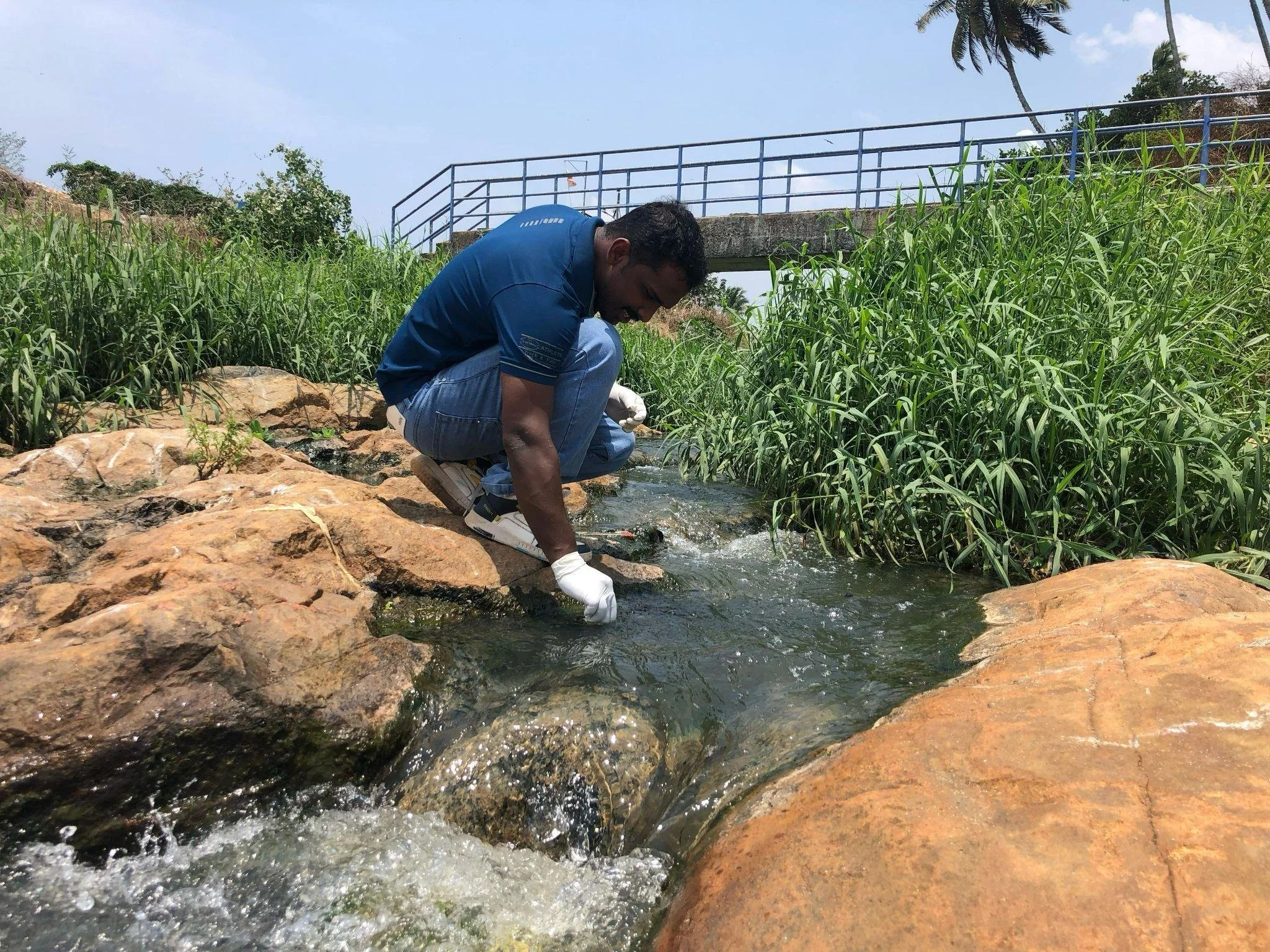
We took water samples. The lab results were bad coliform counts five times above the safe limit, dissolved oxygen near zero, and microplastic traces in the sediment. The biodiversity score, which should ideally have shown small fish and invertebrates, showed almost nothing but snails and mosquito larvae.
Then came the public health angle. Local clinics were recording higher rates of skin infections, respiratory issues, and vector-borne diseases in the same wards adjacent to the canal. When we overlaid the disease data with our GIS waste maps, the pattern was obvious pollution hotspots and disease hotspots matched.
But data alone doesn’t make change. People do, and that’s where it got complicated.
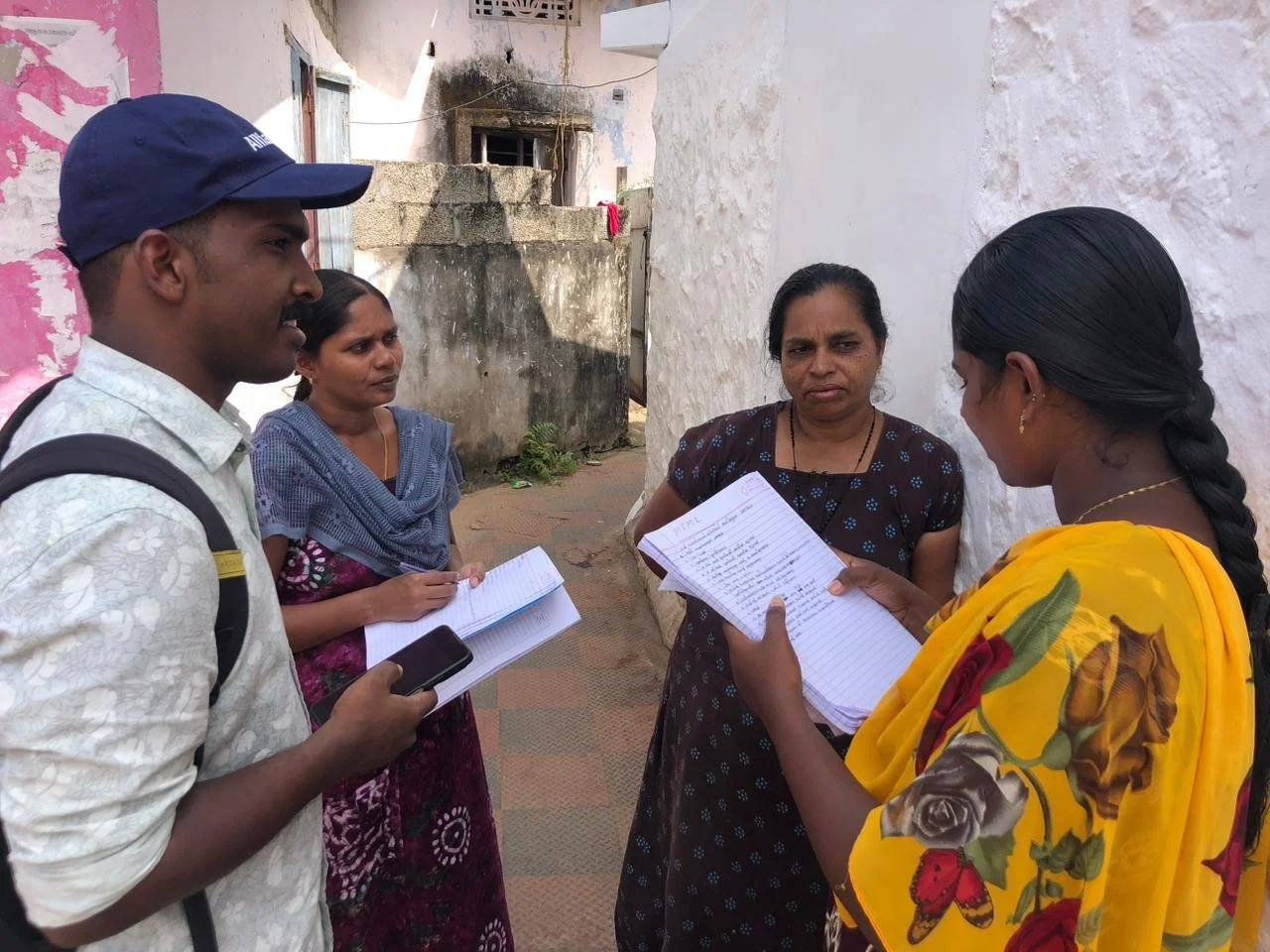
Talking to the residents wasn’t easy. They had seen surveys before. “You people come, take photos, make reports, and go,” one fisherman told me. I didn’t argue. He was right. This time, I decided not to “collect stories,” I sat with them, drank tea, listened. And when I told them I was mapping how the canal affects their health, they started talking.
We learned how solid waste management failures are tied to fisheries decline and domestic health costs. The women’s self-help groups shared how they were struggling with uncollected garbage even after paying waste collection fees. Fishermen showed me fish that had lesions and discoloration. They said it started after the waste line from the upper wards began leaking into the canal.
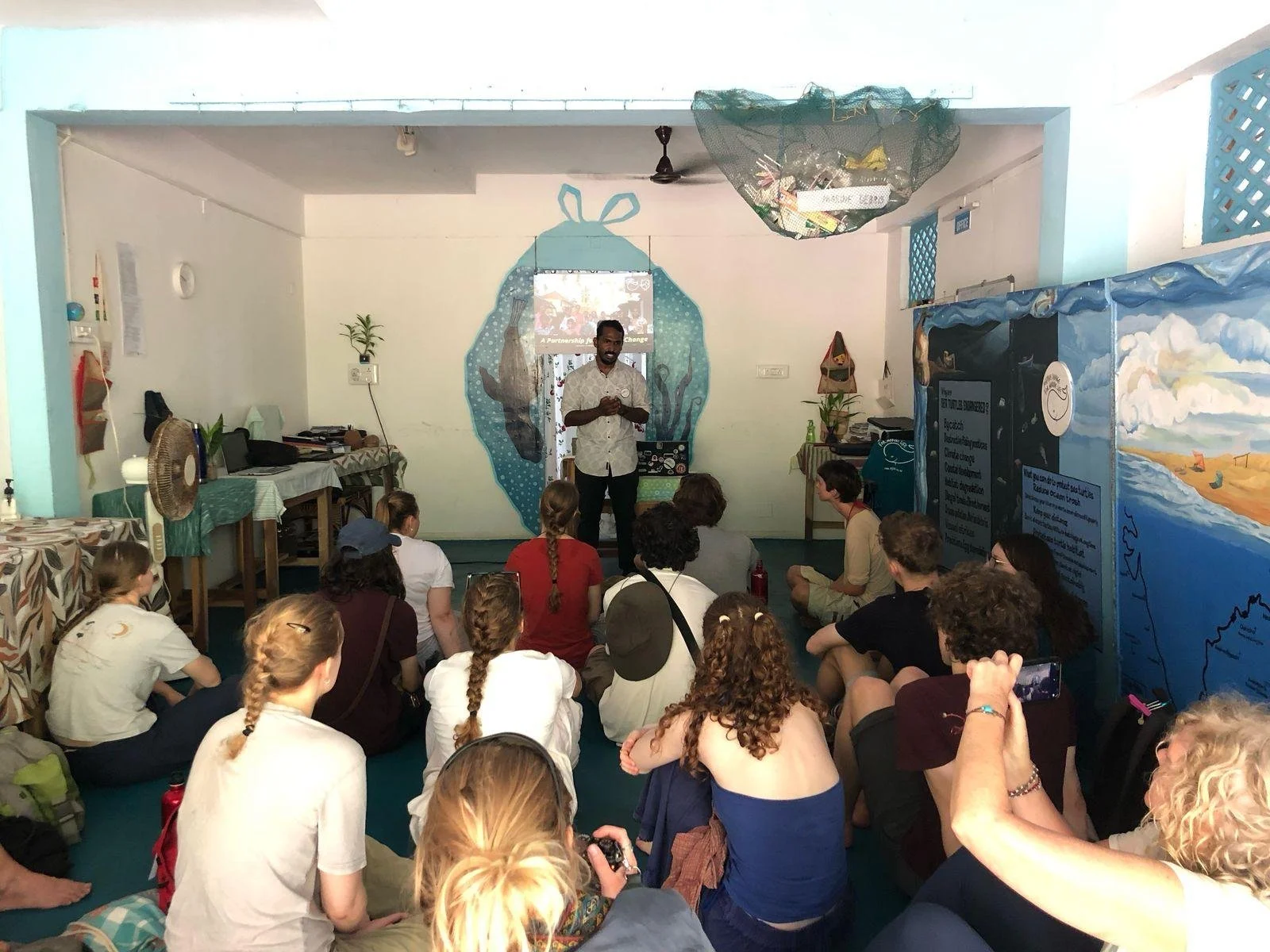
When I presented the findings to the local panchayat, one official shrugged, “We’ll forward it to the Port Authority.” That’s when I realized how politics runs deeper than the canal itself. The port project gets attention; the canal gets excuses.
But some people listened. A ward member, one of the few genuinely active ones, asked us to run a community waste audit. We went door-to-door, documenting types of waste generated and where it ended up. We found that over 60% of waste entering the canal was domestic, and around 20% was from unregulated fish processing units. It wasn’t an industrial-scale disaster; it was a thousand small acts of neglect every day.
Then came the behavioral side, what people throw away, how they see “waste.” It wasn’t ignorance; it was habit. The canal had become an invisible part of the drainage system. Breaking that meant hitting the social layer, not just the environmental one.
So we worked with the NGO to start small habit-change drives. School students joined cleanup efforts. We made a basic GIS-based story map of the canal showing where the waste enters, where kids play, and where health issues spike. That map did more than any PowerPoint presentation when we showed it at the parish hall; people finally saw the link between their backyard and their body.
The technical side wasn’t easy either. The canal had no single managing authority. It cut across three wards and two jurisdictional lines, so any proposal for restoration had to go through multiple offices. Files got “lost,” approvals got delayed, and everyone blamed someone else.
Still, we kept at it. Over the months, we developed a multi-layer data framework combining remote sensing, local surveys, biodiversity scoring, and health indicators. I was using open-source tools like QGIS and R for analysis. The aim was to make an integrated environmental-health dashboard that could show how each small intervention could ripple through the system.
The results were eye-opening. Even a 10% reduction in waste inflow could improve dissolved oxygen levels by 15% and reduce mosquito breeding zones by about 25%. That’s measurable change, small but real.
But it wasn’t all smooth. Field resistance was constant. Fishermen accused us of working for the government, waste collectors blamed the public, the public blamed the government, and somewhere in between, the canal kept flowing dark, thick, and silent. Personally, the hardest part was seeing how normalized decay had become. People had stopped expecting better. Even the smell didn’t bother anyone anymore. That’s when I understood that environmental health is not just about pollution control, it’s about psychological adaptation to decay. Once people accept dirt as normal, policy dies.
Six months in, things started shifting. A few households began sorting waste. The parish priest mentioned waste management in his sermon. The panchayat discussed final plans for segregation points in two wards. Small, scattered wins but wins nonetheless.
I realized that real change isn’t triggered by reports or big funding. It begins when someone like Anil Chettan, who once sat beside the canal drinking tea and swearing at the system, starts telling his neighbors, “We should at least stop dumping soap water.” That’s the beginning of civic sense, not loud, but honest.
As I prepare to continue another six months of this work, I see it differently now. The Gangayar estuary isn’t just an ecosystem. It’s a test of how our governance, culture, and economy treat each other. It’s also a mirror of urban transition where a fishing village turns into a port city but forgets to carry its ecology along.
My plan now is to push for an interdisciplinary management model combining local ecological monitoring, public health data, and citizen-driven reporting. We’ve already designed a pilot mobile-based waste tracking system that tags dump points using GPS. If implemented, it could close the data gap that’s been killing this ecosystem for years. I’ve seen the canal at its worst. I’ve seen fishers pulling dead fish, kids falling sick, and people living next to a drain they still call a river. But I’ve also seen small courageous people cleaning without cameras, NGOs bridging trust, and local leaders trying to fix a mess they didn’t make.
And somewhere between the data and the despair, the canal began to look different. Not because it was clean yet, but because people had started talking about it again.
That’s when I knew the canal had finally spoken back.
About
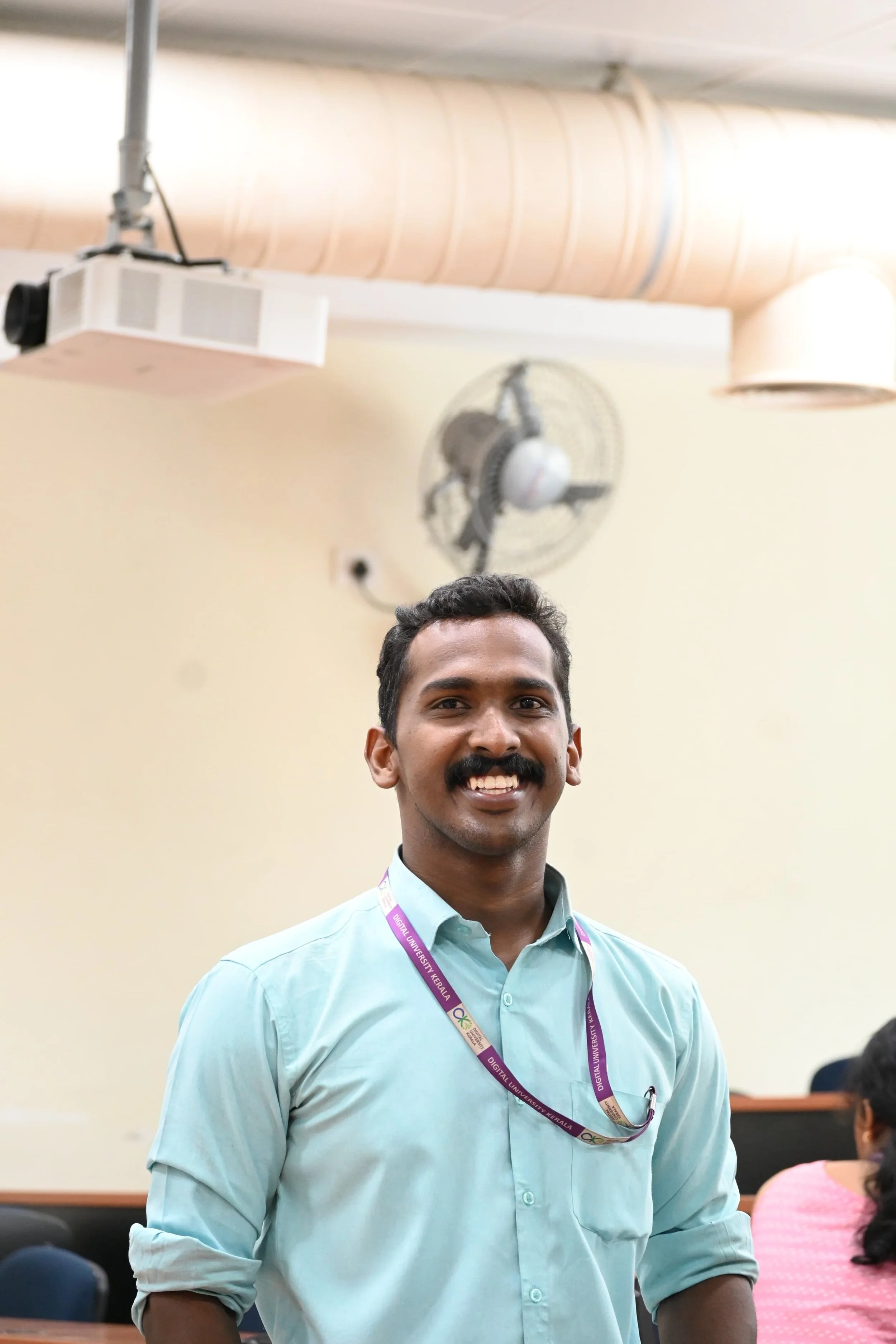
Sai Shankar G Nair
Senior Executive, ECA Group
National Productivity Council, New Delhi
MSc Ecology Specialization in Ecological Informatics & MSc Environmental Science
School of Informatics, Kerala University of Digital Sciences, Innovation and Technology (Digital University Kerala)& IGNOU, IND
I am an ecologist and researcher working at the intersection of ecology, data science, and community resilience. My work focuses on translating complex environmental data into actionable insights for local governance and citizen participation. In Vizhinjam, I led the Integrated Analysis of the Gangayar Estuary, mapping ecological degradation, public health impacts, and waste dynamics while collaborating with NGOs and local bodies. Beyond field research, I advocate for climate communication and participatory environmental policy, ensuring that communities closest to environmental change lead their own recovery. I have previously worked on projects involving fisheries resilience, invasive species, and biodiversity monitoring and use storytelling as a bridge between data and people. I believe every dataset has a human face and every ecosystem has a story that deserves to be heard.