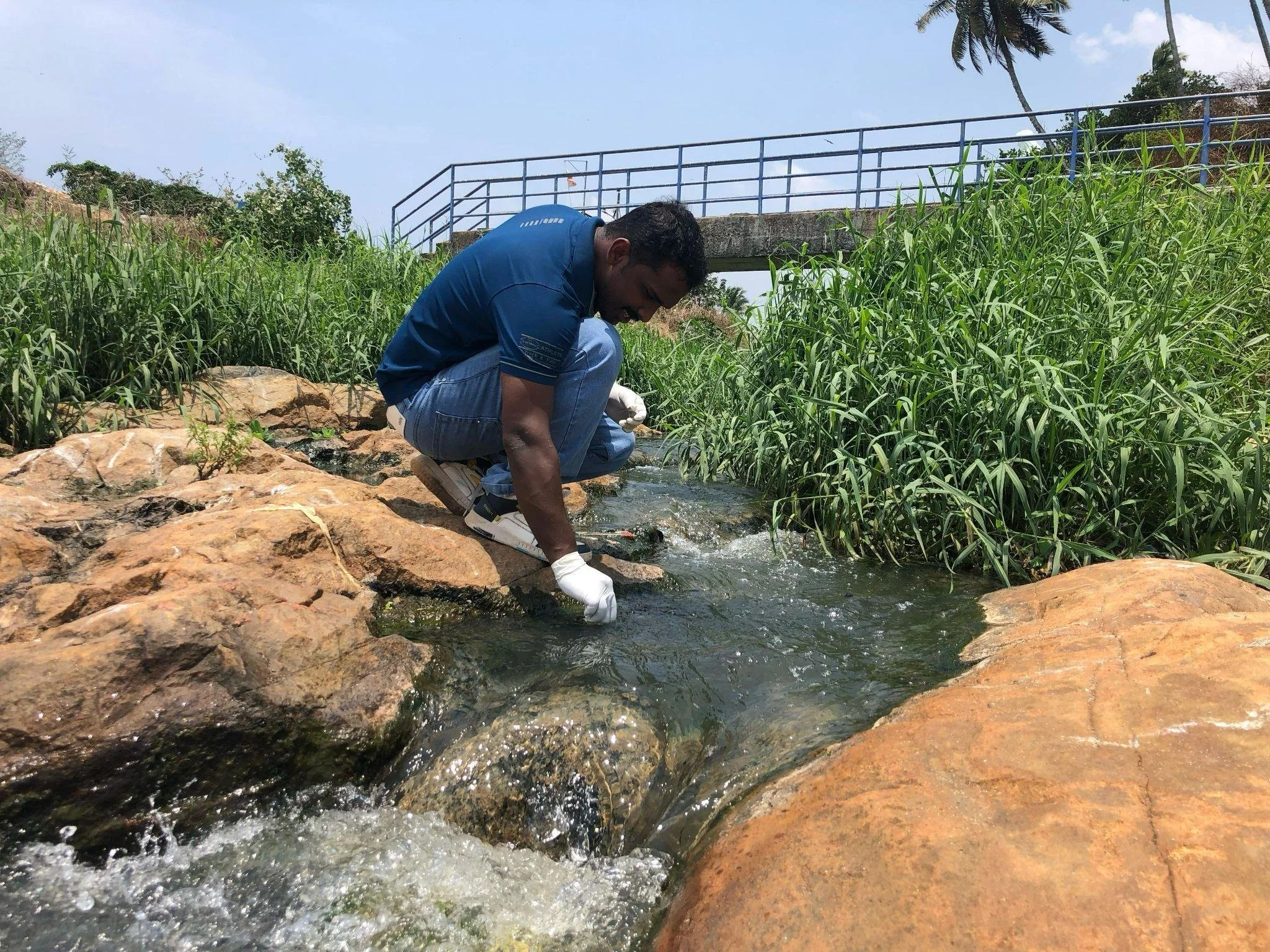
water quality

The Canal That Spoke Back

The Canal That Spoke Back

In Vizhinjam’s Gangayar estuary, a neglected canal became both a mirror and a warning. Through six months of fieldwork—combining GIS mapping, biodiversity analysis, and public health data

I uncovered how ecological decay and human neglect intertwine. This story traces not just the pollution of a waterway but the slow awakening of a coastal community learning to reclaim its voice, one conversation and cleanup at a time.

Ondiri Wetland Botanic Garden: A Community Hub for Experiential Learning

Ondiri Wetland Botanic Garden is a reflection of how ideas can materialise with support from like-minded people. This is a journey of how an almost dead ecosystem has sprung back to life with diversity of both flora and fauna, with human support. It is a testament to having nature and people live as one. It is all thanks to Youth4Nature through INUKA Afrika that we have reached this far. It has become a beehive of activities, where the community, including learning institutions, are gathering to study about the Ondiri Wetland, access to clean water, conservation of nature and climate change action.

Eating Away at the Land: The Lives of Local and Indigenous Communities in the Basoko Territory

In Basoko territory, in the heart of the Congo basin, local and indigenous communities are witnessing their land and rivers being poisoned by oil exploration and destructive logging. This story highlights how resource exploitation is threatening biodiversity, cultural heritage, and livelihoods, while amplifying the voices of those who resist. Through our podcast, Jambo Radio (a community and indigenous media) seeks to shed light on these silenced realities and spark global solidarity for climate justice, indigenous rights, and the protection of one of the world’s most vital ecosystems in the Democratic Republic of Congo.

Doctor of Nature!

Doctor of Nature!


Have you ever imagined growing food from waste? We did it! We were capable of turning waste into potential material for sustainable agriculture while empowering the local rural community to mitigate and adapt to climate change effects, preserving the local natural resources, and protecting the environment despite all the challenges our country is facing.

Let's H.E.L.P. (Heal the Environment, Love The Planet)

Let's H.E.L.P. (Heal the Environment, Love The Planet)

We live on a blue planet, with oceans and seas covering more than 70 per cent of the Earth’s surface. Oceans feed us, regulate our climate, and generate most of the oxygen we breathe. Oceans are facing threats as a result of human activity. Every year, an estimated 8 million tons of plastic waste end up in the world’s oceans. Let's HEAL THE ENVIRONMENT & LOVE THE PLANET.

Surviving the Environment Arena and Beyond: Maasai Mara Reserve

New reforms to education in Africa are transforming learning opportunities for the continent's youth, but learners still lack access to relevant skills that will help them secure employment opportunities. What can be done? I am passionate about science, one of the things about science that drew me to it is the fact it's about the discovery of knowledge. I believe that Africa, and especially Kenya, has all the resources that it needs to keep its people healthy, yet people are not enjoying the best health. One way that I believe I can solve that problem is by researching medicinal plants because I believe we have those resources we just need to find out the compounds in plants that we can utilize to keep ourselves healthy. Everything that we need to be healthy is provided to us by nature, we just have to tap through research and also by educating people on how to apply those principles and knowledge that we learned from research into being healthy. I envision a world where there is equality, quality education, improved health services for all, and good, effective and transformative leaders.