
How Long Will We Remember?
by Abishek Pradhan
I grew up believing that memory had a smell. In Bhaktay Busty, it smelled of wet soil after the first April rain, of crushed mustard green leaves between fingers, of cow dung warming in the early sun. Memory also had a sound, for me, the sharpening of sickle on a whetstone and the murmur of neighbours over fences of maize stalks. These were not grand things, but they were complete. They held a village together without ever announcing that this was what they were doing.
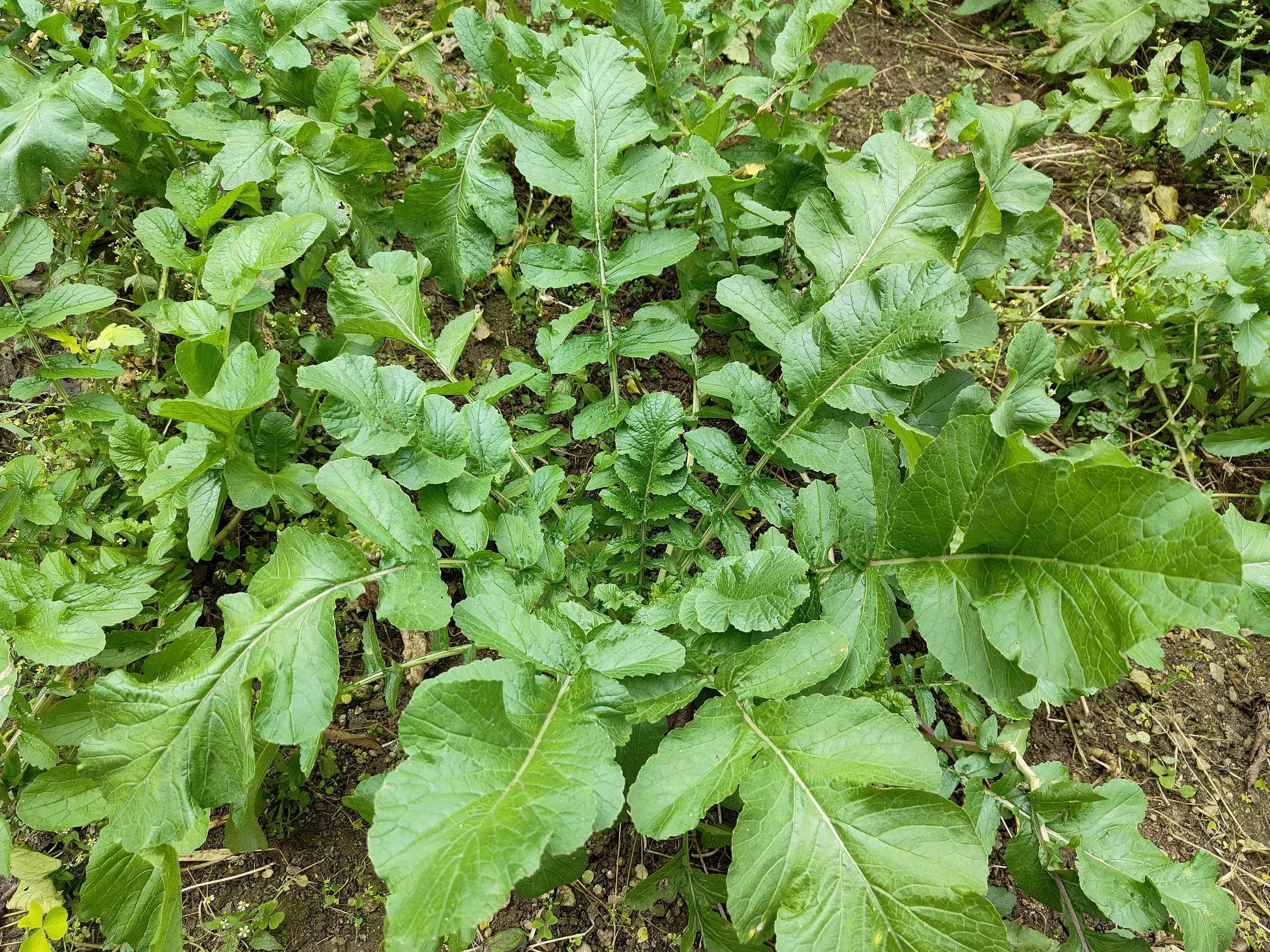
Radish
Bhaktay Busty is a small village in Darjeeling, pressed tight between two worlds. On one side is the ever-expanding concrete forest of the main town, rising floor by floor, impatient with slopes and seasons. On the other side lies the Arya tea estate, a disciplined green spread of monoculture, where one plant repeats itself with military precision across the hills. Our village is sandwiched between these certainties, and perhaps that is why it has always felt uncertain, fragile, and yet stubbornly alive.
My father and mother are third-generation small-scale farmers of this village. They inherited very little land, and even less security. What they did inherit was knowledge - unwritten, uncelebrated, but precise. They know when the soil is tired and when it only pretends to be. They know which corner of the field welcomes spinach and which resents it. They know that fuelwood is better collected when you talk less and walk more. Like most families here, we are part of a community that cultivates small patches of land but grows a surprising abundance: mustard greens, spinach, radish, maize, chayote, pumpkin, yam, cassava, beans - multiple at once, in a rotation that follows no textbook but obeys a logic refined over decades.
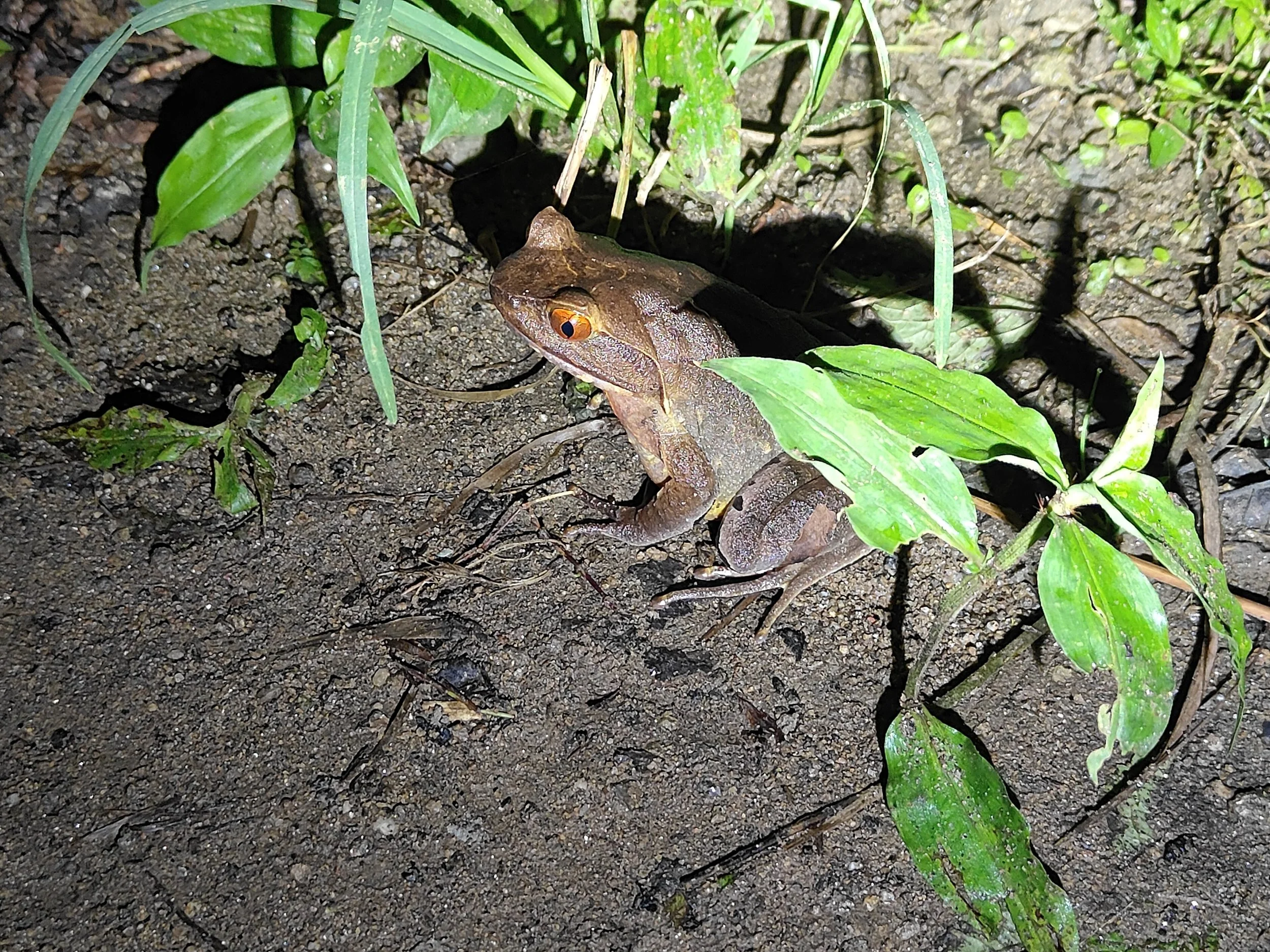
Bengal shadefoot toad (Megophrys robusta) in the farmlands
We also keep animals. A cow, maybe four, if the year has been kind. A goat that eats everything except what you want it to. Local chickens that wander freely, laying eggs where they please. These animals are not assets in an economic sense alone; they are participants in the household. Their dung feeds the soil, their presence regulates our days, and their loss is felt as more than a financial setback. This interweaving of crops, animals, people, and land is what outsiders often romanticise as “traditional living,” but for us it is simply survival shaped by memory.
Lately, though, I have begun to notice how memory thins.
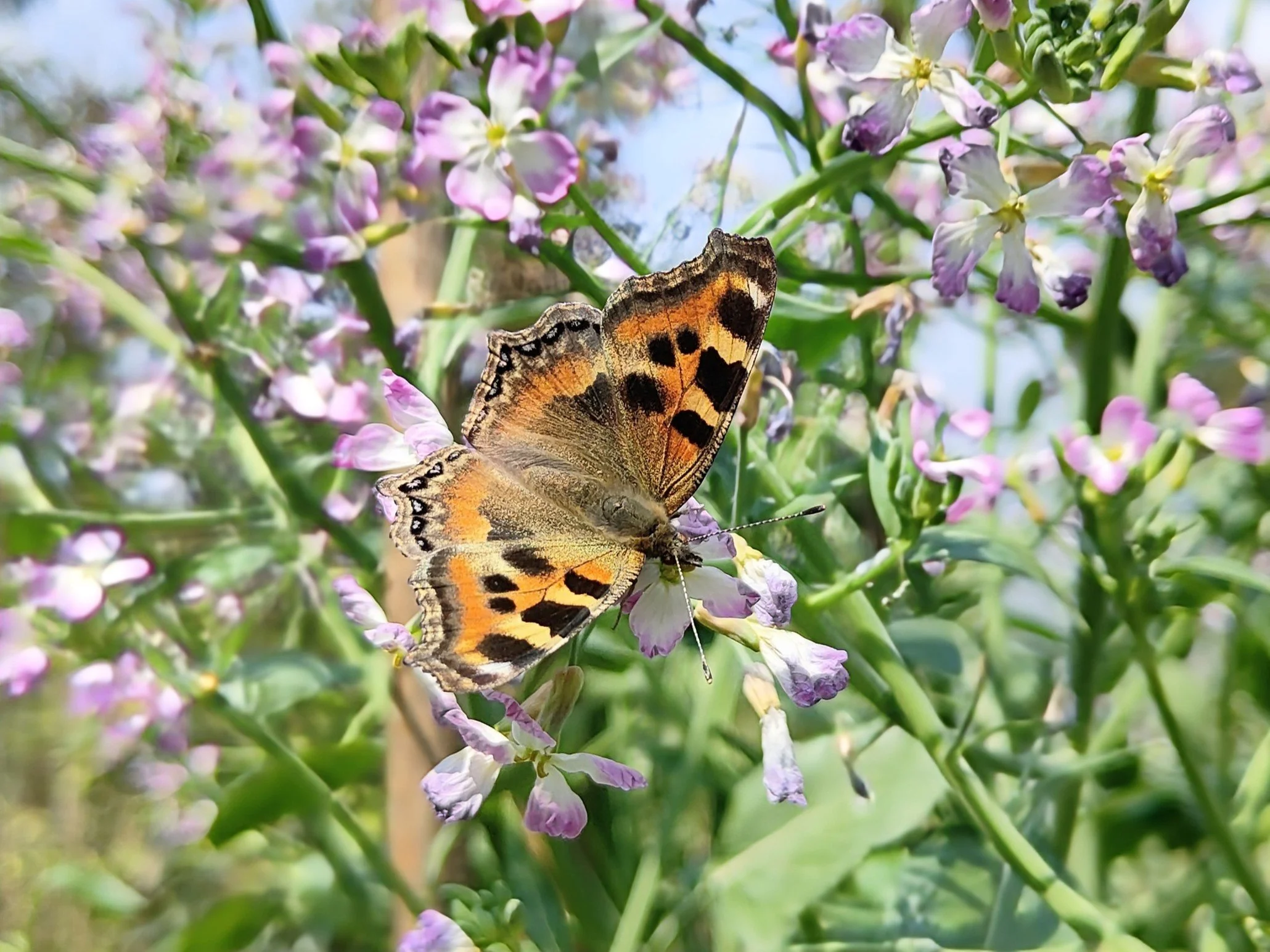
Indian tortoiseshell (Aglais caschmirensis) on radish flower
The first changes were subtle. A neighbour sold a part of his land because his son found work out of town and no longer wanted to farm. Another stopped growing certain vegetables because the market preferred uniform produce brought in trucks from elsewhere. Slowly, the diversity of fields began to resemble the tea estate next door - in intention, but not in economics. Expensive replaced diverse. Predictability replaced resilience. What we lost was not just crops, but the relationships between them.
Decisions about land, markets, and development are taken elsewhere - by planners, traders, administrators who rarely step into our fields. We are integrated into the economy as consumers and cheap producers, but excluded from decision-making that shapes our future. Our village feeds the town, but the town does not listen to the village. Concrete rises, townships expand, and Bhaktay Busty is expected to adjust quietly.
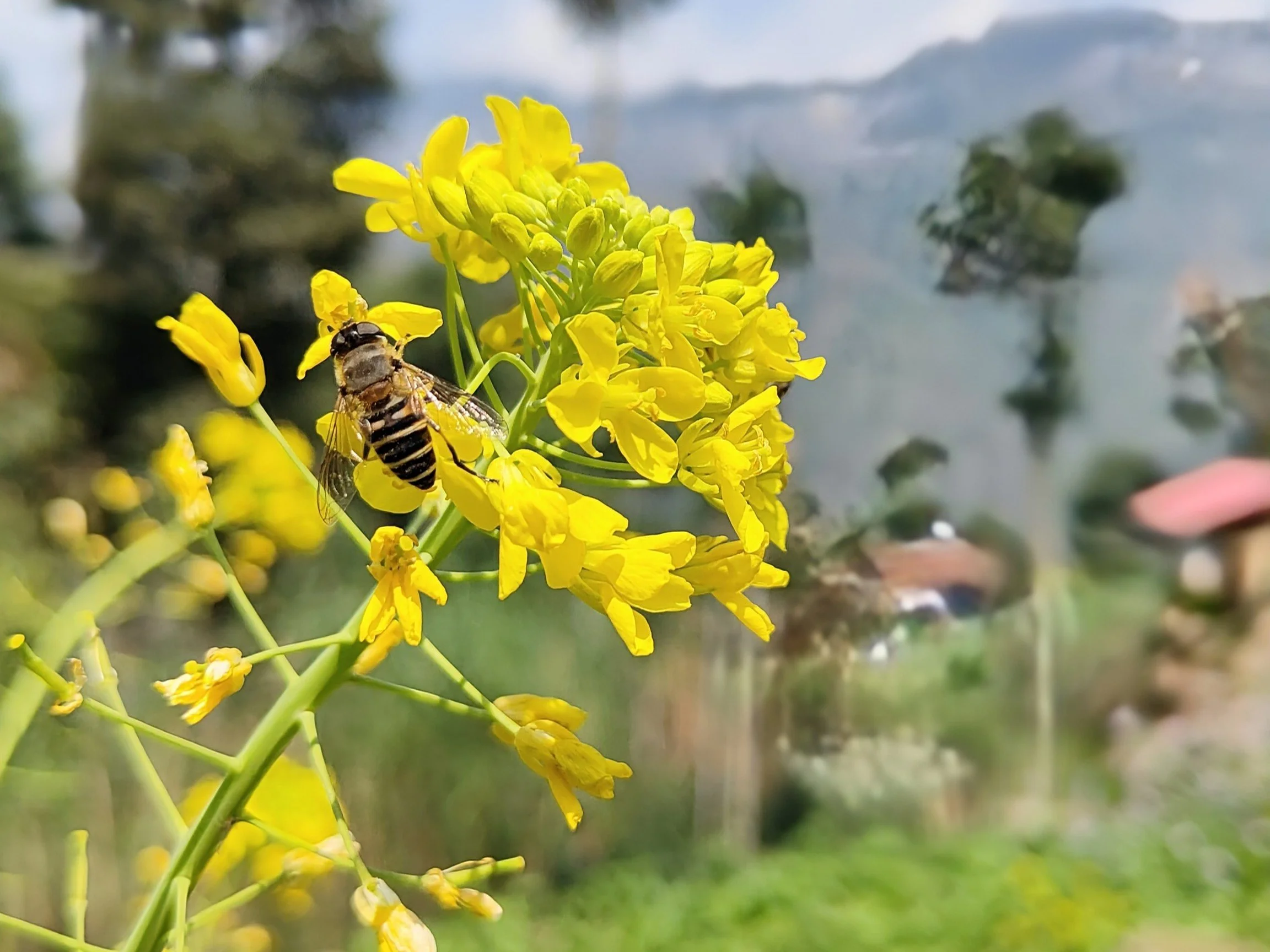
A hoverfly on mustard green flower
Environmental inequity follows close behind. The town benefits from infrastructure, waste systems, and water pipelines, while our village negotiates scarcity. Springs dry earlier than they used to. Rainfall patterns no longer follow the stories my grandmother told. Chemical runoff from uphill finds its way into our soil and water. We contribute least to environmental degradation, yet we absorb its costs most directly. When vegetables fail, or livestock fall sick, there is no buffer, no insurance, no apology.
Social vulnerability grows in these cracks. Young people leave, not because they despise the land, but because the land no longer promises dignity. Elderly farmers carry more of the agricultural burden as the young seek wage labour elsewhere.
As a boy, I did not have words for these changes. I only sensed that something was slipping away. Fields that once held multiple colours now looked simpler, quieter. Festivals felt thinner, attendance smaller. Stories repeated themselves because there were fewer listeners. Integrational memories - the collective remembering of how we farmed, shared, decided - were being erased not by force, but by neglect.
And yet, even as I write this, I cannot say that Bhaktay Busty is a story of loss alone.
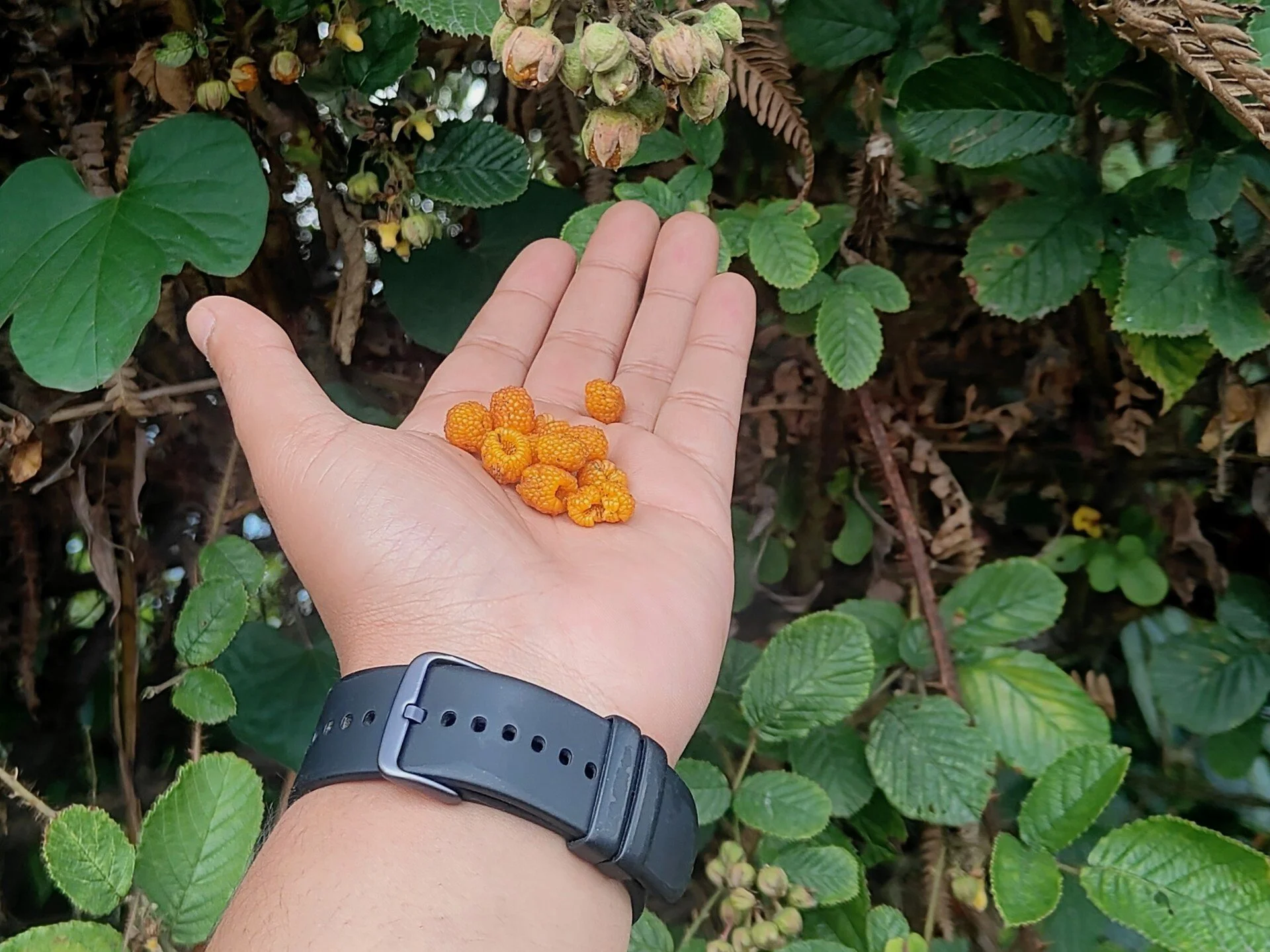
Himalayan raspberry (Rubus ellipticus)
Hope here does not arrive as a sudden transformation. It appears in careful gestures. A group of farmers deciding to revive forgotten seed varieties. A schoolteacher asking children to document what grows in their kitchens, not just what is printed in textbooks. My aunt insisting on planting turmeric even when buyers ask for something else, because “the soil remembers this crop.” These are acts of quiet resistance, grounded in traditional ecological knowledge that has always adapted without advertising itself.
There is also hope in recognition, when consumers begin to ask where their food comes from, not as a trend, but as responsibility. When they understand that agro-biodiversity is not aesthetic diversity for a market stall, but insurance against climate uncertainty. When they are willing to support small farmers not with charity, but with fair prices and long-term commitment. Recognition turns invisible labour into valued work.
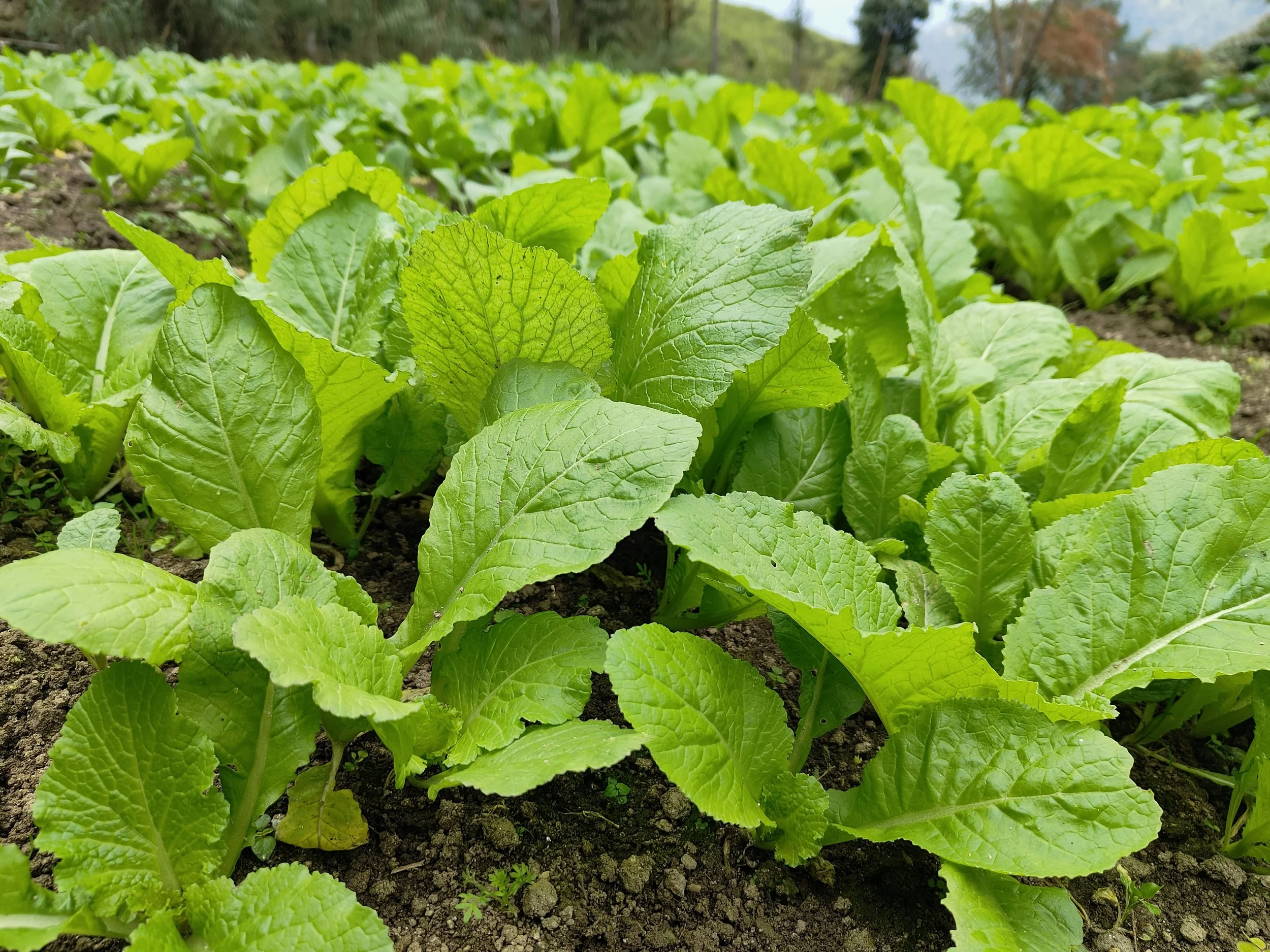
Mustard green plant
Administrative proactiveness can amplify this hope, if it chooses to. Policies that protect small landholdings, support mixed farming systems, and integrate farmers into decision-making processes are not radical ideas. They are practical responses to vulnerability. Inclusive decision-making; where villagers are consulted not as beneficiaries but as experts of their own landscapes, can correct integrational injustice. Support for traditional practices, combined with appropriate innovation, can strengthen community resilience instead of replacing it.
I often wonder how long we will remember what it means to live with the land rather than on it. Memory, after all, does not disappear overnight. It fades when it is no longer practiced, no longer respected, no longer supported. Bhaktay Busty stands at that threshold. Between concrete and monoculture, between neglect and possibility, it asks a quiet question of those who benefit from its labour and food.
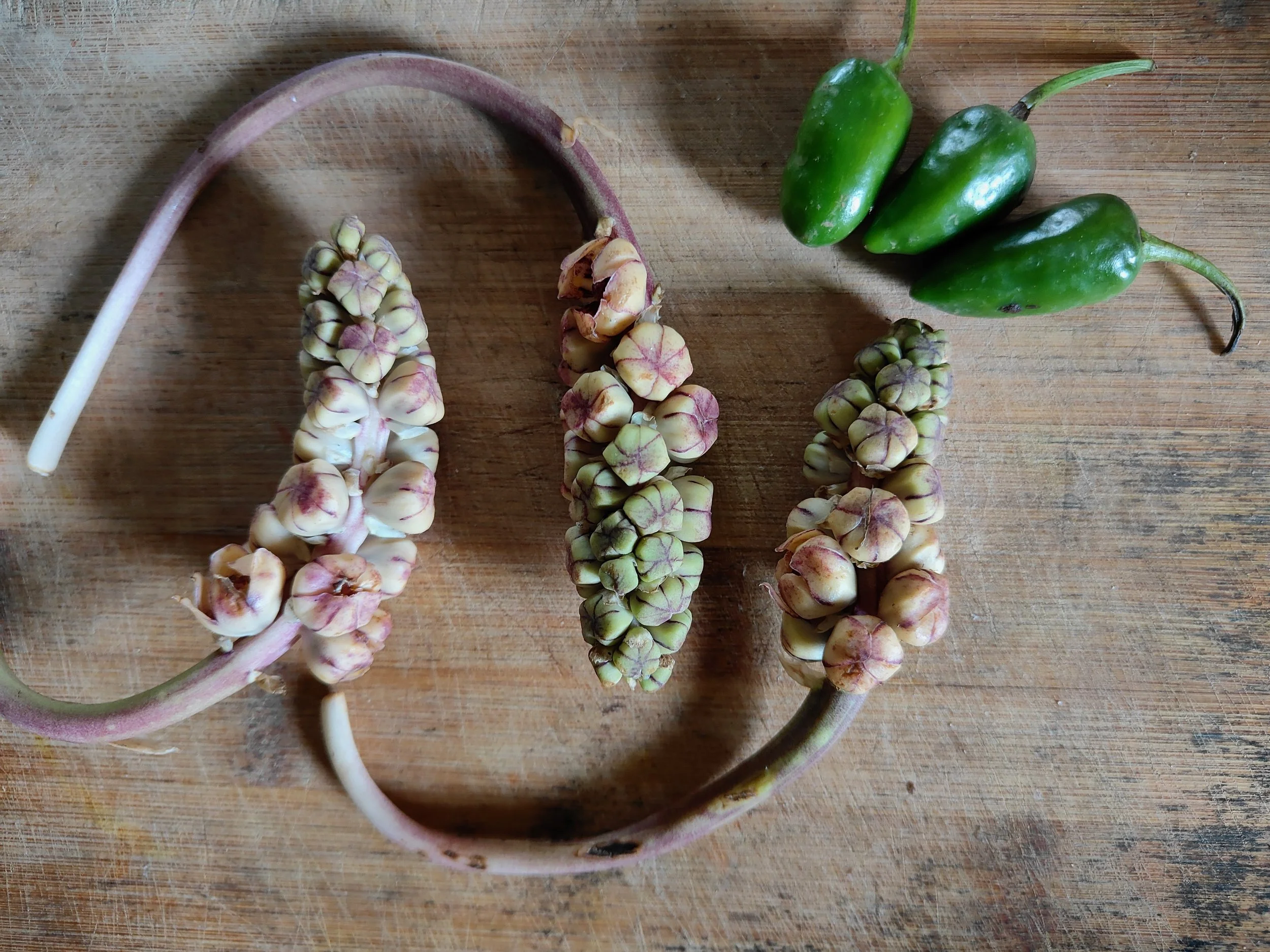
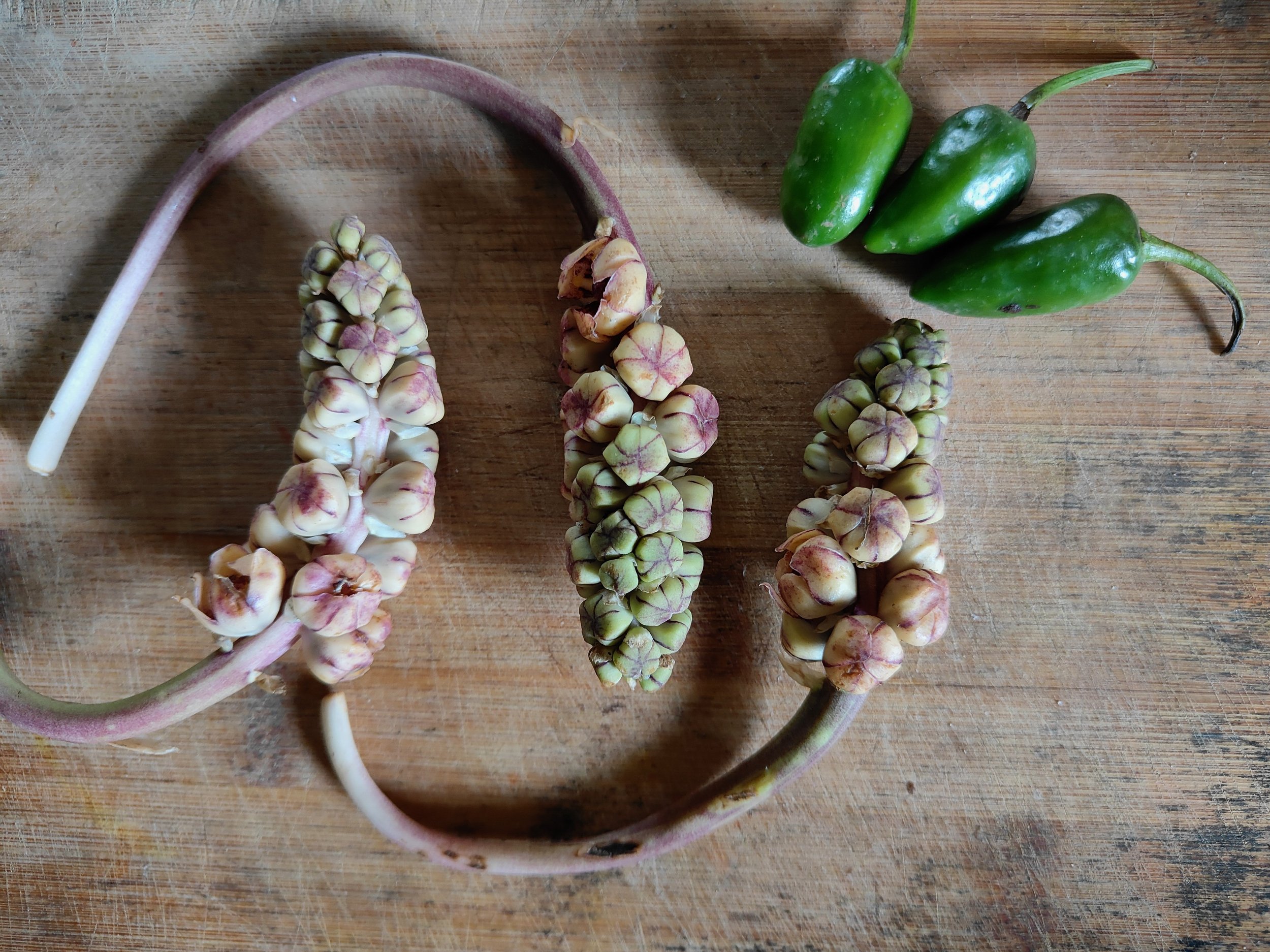
Local vegetables, Nakima (Tupistra sp.) and Dalle round chilli
The boy I once was still walks these paths, noticing small changes, storing them somewhere between worry and hope. He understands now that remembrance is not passive. It requires awareness, reverence, and action. It requires consumers who care, administrators who listen, and communities who are allowed to decide their own futures.
How long will we remember? The answer depends not only on villages like Bhaktay Busty, but on everyone who eats, builds, governs, and chooses - often without seeing the small fields that make those choices possible.
About
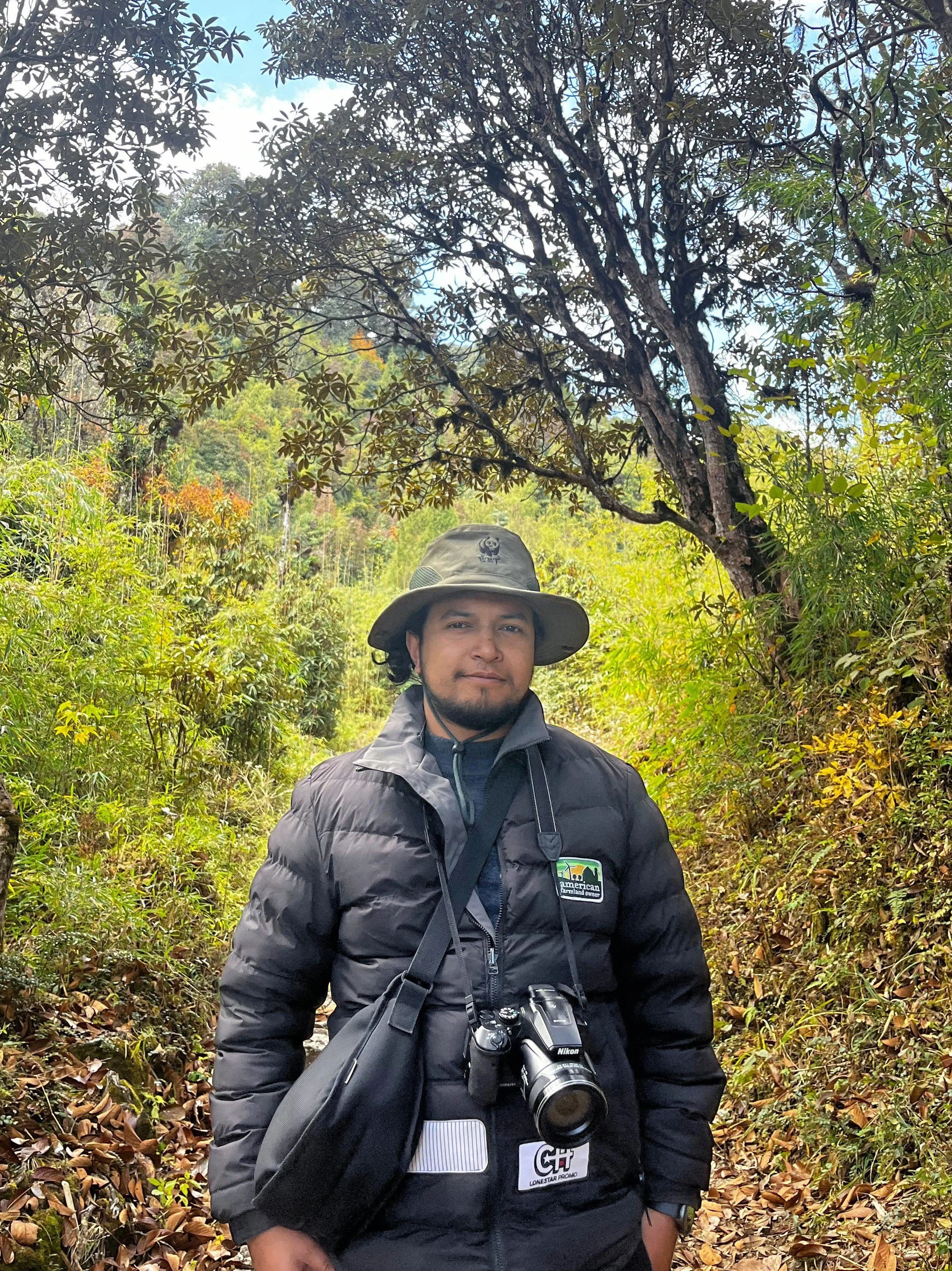
Abishek is a young professional working primarily in regenerative livelihood in the Sikkim-Darjeeling Himalaya. He is keenly interested in local food systems, ecology and social development. He is currently working with WWF-India.