
This blog was written and submitted by Y4N Global Ambassador, Melyn Abisa
Nairobi to Rome: Linking Food, Land and Climate Futures
Travelling from Nairobi to Rome, a city layered in history, art, and political heritage, to attend the 2025 World Food Forum (WFF) at the Food and Agriculture Organisation of the United Nations (FAO) headquarters was an experience that connected the past and future of our planet’s food and climate systems. The city’s ancient cobblestones echoed the Forum’s message that sustainable food production, much like human civilisation, begins on land. 95% of our food starts on land, and healthy lands begin with healthy soils. This vital connection between soil, food and climate shaped many of the week’s conversations, reminding us that protecting our earth is not optional, it’s an urgent call to action.
The World Food Forum 2025: Elevating Youth Voices
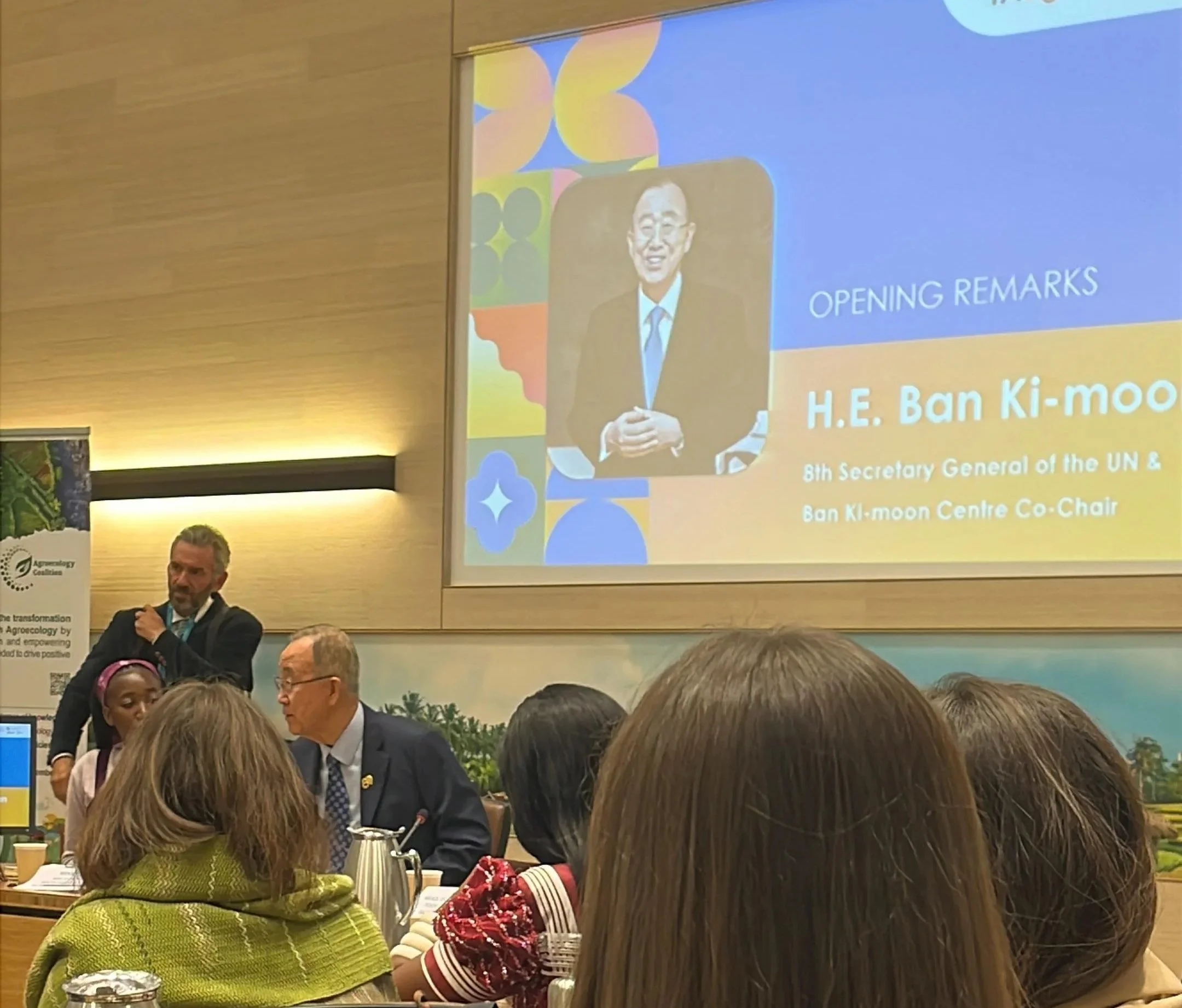
FAO Address of H.E. Ban Ki-moon
The World Food Forum is a global platform dedicated to transforming agrifood systems through youth, science, innovation and investment. The 2025 edition, themed “Hand in Hand for Better Foods and a Better Future,” placed young people at the centre of global discussions. Thousands of youth delegates gathered to share research and lived experiences, all aiming to reshape how the world feeds itself while restoring ecosystems.
Youth-led initiatives took the spotlight in the Youth Assembly, Science and Innovation Forum, and Investment Forum, showcasing the tangible role young leaders are playing in transforming food systems. The message was clear: intergenerational collaboration and bold youth actions are essential to secure a sustainable food future.
Nurturing Youth-Led Climate Action: Science, Equity and Community at the Core
The side event, hosted by FAO Africa Youth Professionals and moderated by Mohamed Langston, convened dynamic youth voices from across the continent, including Vania from Mozambique and Mame from Senegal, to explore how science-informed, youth-led solutions are driving ecological restoration and creating sustainable livelihoods. In his opening remarks, Tchegoun Blaise emphasised that today’s youth are moving beyond advocacy and policy dialogue to deliver measurable impact in transforming communities and strengthening resilience against climate shocks.
The discussion highlighted the importance of integrating youth inclusion into policy and decision-making through a bottom-up and Human Rights-Based Approach (HRBA). This framework ensures that projects not only protect ecosystems but also uphold the rights, dignity and agency of local communities. By aligning youth-led actions with human rights principles, including participation, accountability, non-discrimination, and transparency, we can ensure that climate and restoration projects are equitable and inclusive.
Panellists explored the growing potential of green jobs and bioeconomies, spanning from restoration enterprises to biowaste valorisation and clean cooking innovations, as pathways to create sustainable employment and enhance local economies. A key insight from the discussion was that financing youth initiatives must go hand in hand with capacity strengthening. Access to funding alone is not enough; youth need to demonstrate readiness through impact data collection, evidence-based storytelling, and financial accountability to build trust with investors and partners.
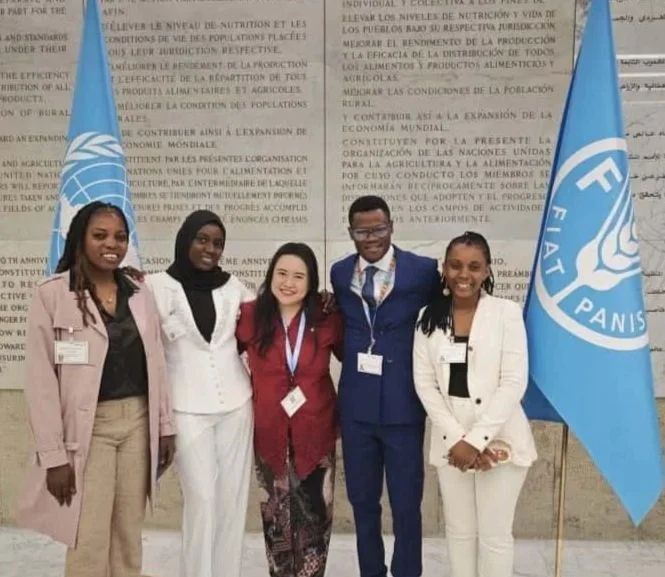
Delegates together at FAO
Importantly, we emphasised intergenerational mentorship as a catalyst for sustainability. By fostering collaboration between experienced practitioners and emerging leaders, projects gain technical depth, cultural continuity and innovative thinking. Building a community of practice where youth exchange insights, share tools and learn from diverse experiences is key to scaling impact across Africa.
In closing, Mas Dino Radin highlighted that the success of any environmental intervention ultimately depends on community ownership. When people lead, contribute to, and benefit directly from restoration projects, they become long-term stewards of both the land and its legacy.
Reflections
The conversations in WFF showed that youth-led action is not supplementary; it is transformative. The idea that “we must move from being consulted to co-creating solutions” resonated deeply because young people should be at the centre of design, implementation and monitoring processes for projects that impact their communities. Empowering local communities to collect and use data fosters innovation, accountability, and more adaptive solutions. The message that rang loudest across all sessions was a question we must all ask ourselves: “Are we bold enough to act at the speed of urgency?”
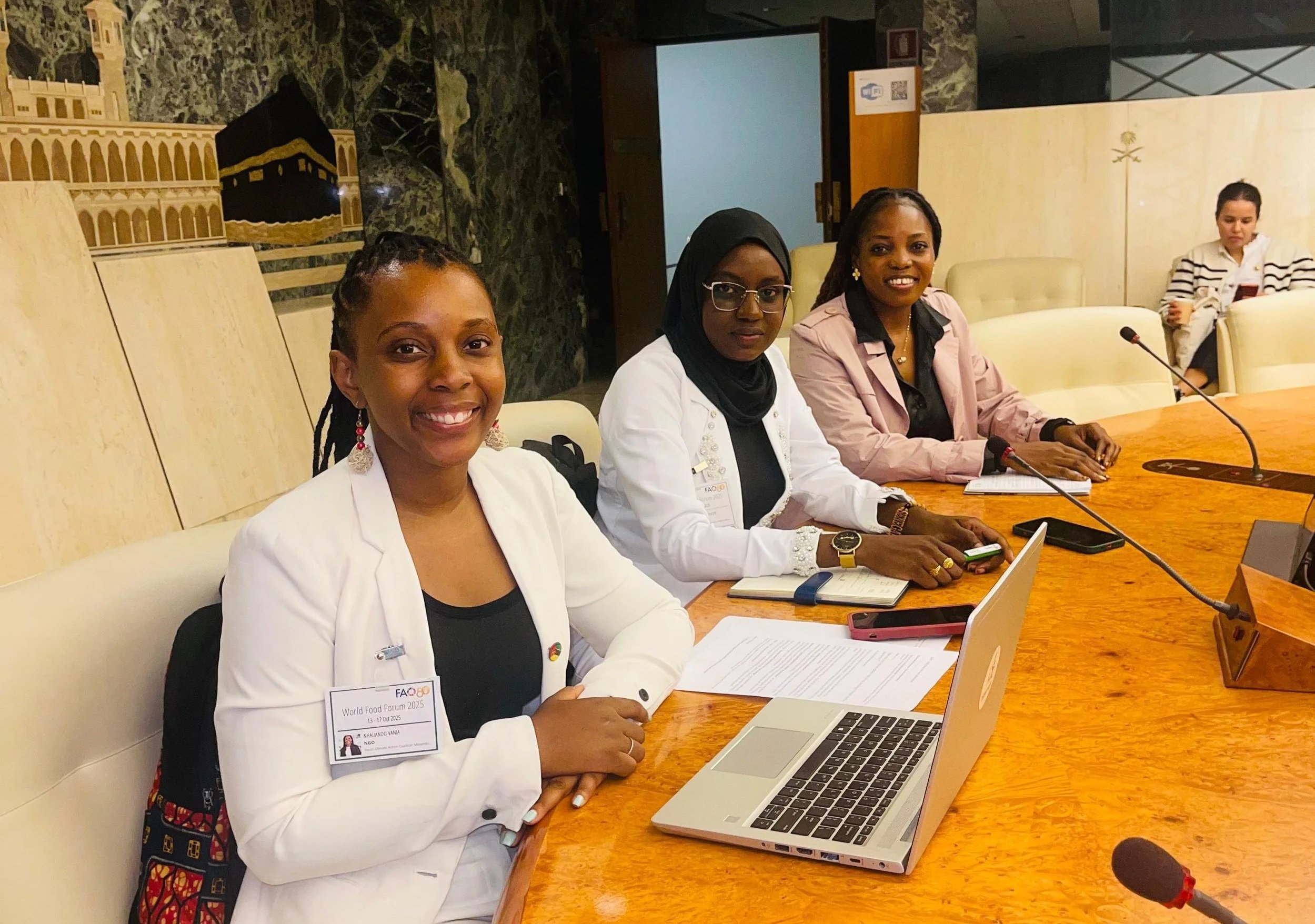
Youth Roundtable
Words to Action
The conversations and commitments made in Rome are steps for Youth4Nature to continue to advance youth-led restoration with a focus on transforming conversations into actions that restore nature, empower youth and sustain communities by:
Strengthening storytelling and impact documentation from grassroots projects.
Leveraging partnerships and networks formed for broader collaboration.
Solidifying youth co-creation in every phase of project design and policy advocacy.
Pursuing innovative financing that aligns with community-driven sustainability.
Scaling the use of citizen science for biodiversity monitoring.
Conclusion: Acting at the Speed of Urgency
Attending the World Food Forum was more than an opportunity to speak; it was a reaffirmation of what youth can achieve when given a platform. From the healthy soils beneath our feet to the policies that shape our futures, young people are driving change across every level of the food and climate systems. The call to action is louder than ever: we must act with urgency, regardless of our background, our futures and shared humanity are tied to the same soil.
References
FAO. (2025). Guidelines on Management Options for Empty Pesticide Containers. https://openknowledge.fao.org/items/097784bf-086b-4532-8cbc-0db9d0e2fe73
FAO. (2025). Guidance on Good Labelling Practice for Pesticides (Second Revision). https://apps.who.int/iris/bitstream/handle/10665/195650/9789241509688_eng.pdf
FAO. (2025). Pesticide Storage and Stock Control Manual. https://fr.scribd.com/document/154481652/FAO-Pesticide-Storage-and-Stock-Control-Manual-En
FAO. (2025). Packaging, Labelling and Advertising. https://www.fao.org/pest-and-pesticide-management/pesticide-risk-reduction/code-conduct/packaging-labelling-and-advertising/en/
FAO. (2025). International Code of Conduct on the Distribution and Use of Pesticides. https://openknowledge.fao.org/server/api/core/bitstreams/f6a95514-8281-4c56-be87-0d7db94e66f6/content
WHO. (2025). Guidelines on Highly Hazardous Pesticides. https://iris.who.int/bitstream/handle/10665/205561/9789241510417_eng.pdf
CropLife International. (2020). Guidelines for the Safe Warehousing of Crop Protection Products. https://croplife.org/wp-content/uploads/2020/01/Guidelines-safe-warehousing-of-CPP-resize-021219-1.pdf
PAN Germany. (2005). FAO Code - Grab it for Action. https://www.pan-germany.org/download/fao_code.pdf
IUPAC. (2010). Disposal and Storage of Pesticides. https://agrochemicals.iupac.org/index.php?catid=3&option=com_sobi2&sobi2Id=8&sobi2Task=sobi2Details
WHO. (2025). Guidance on Management of Household Pesticides.
https://iris.who.int/bitstream/handle/10665/337126/9789240011915-eng.pdfNature. (2025). Impact of Fall Armyworm on Maize Yields. https://www.nature.com/articles/s41598-025-02595-7
Photo: IQV by Cerestia